
Dust & Found: Baseline Residential Workflow
Transparent field notes documenting the structural implementation of the TidyOps operating system for a residential cleaning provider.
By TidyOps
Evidence Disclosure
Outcome metrics are withheld pending consented time window and minimum-count threshold.
This document presents approved interface evidence only, representing structural implementation setup. We do not invent before-state claims, estimate time savings, project growth velocity, or publish generalized customer results.
Data Privacy Scope
To maintain operational security and client privacy, this record relies strictly on public-facing capture points.
The approved public interface screens contain no customer Personally Identifiable Information (PII), staff identities, schedule assignments, or transaction records. No underlying operational data was sanitized or obscured because it is not present in these assets.
Evidence Register
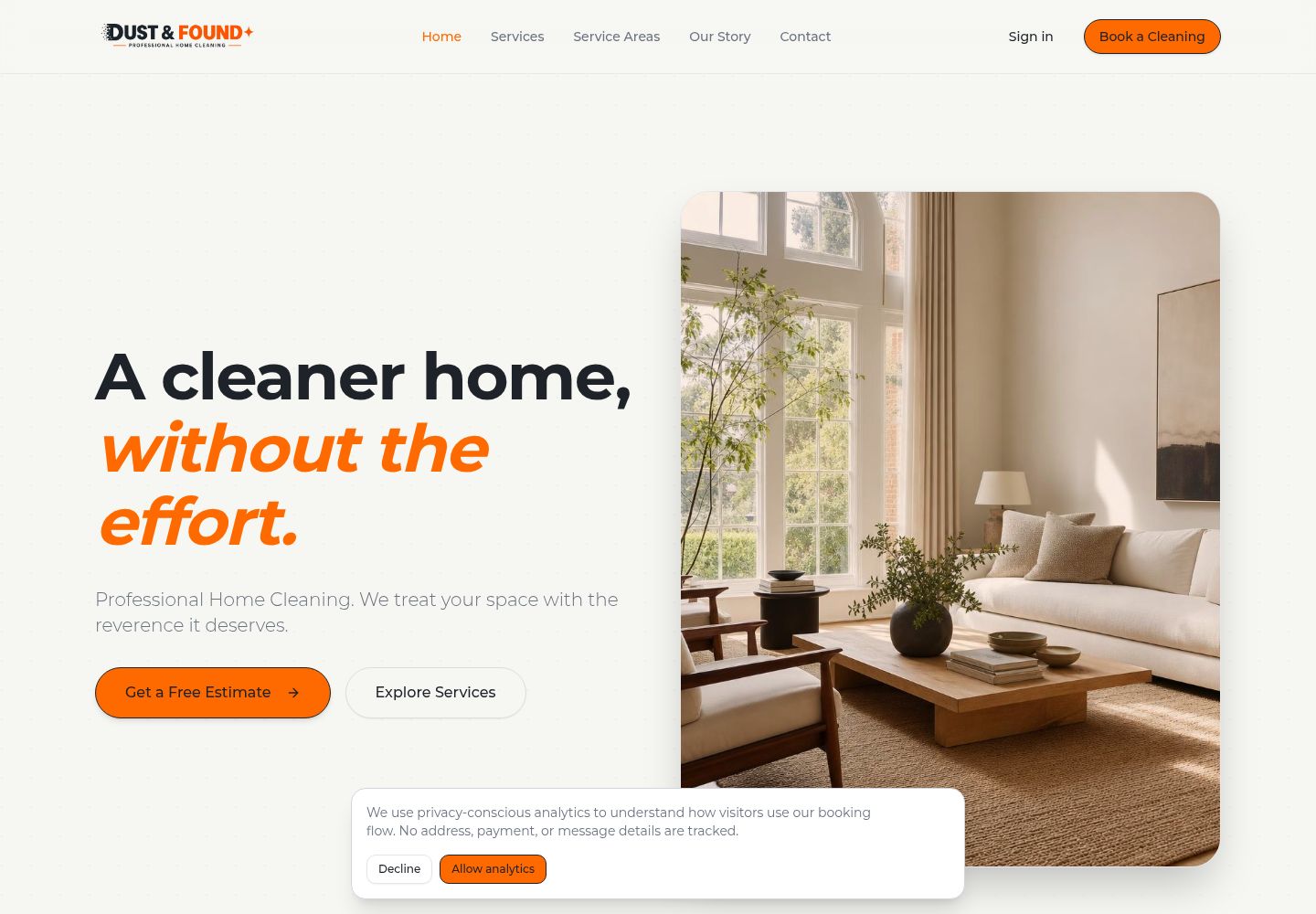
- dust-and-found-homepage.jpg
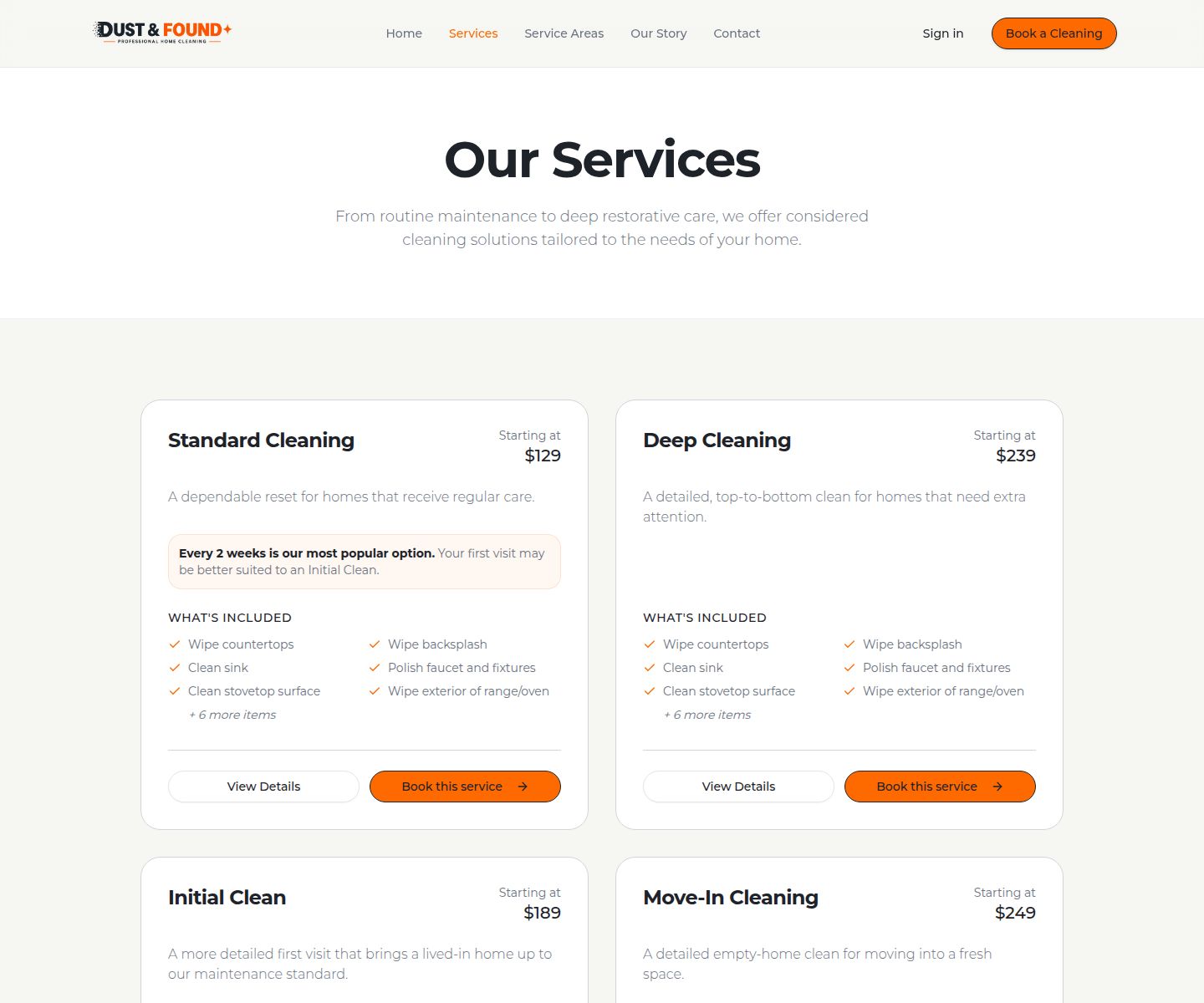
- dust-and-found-services.jpg
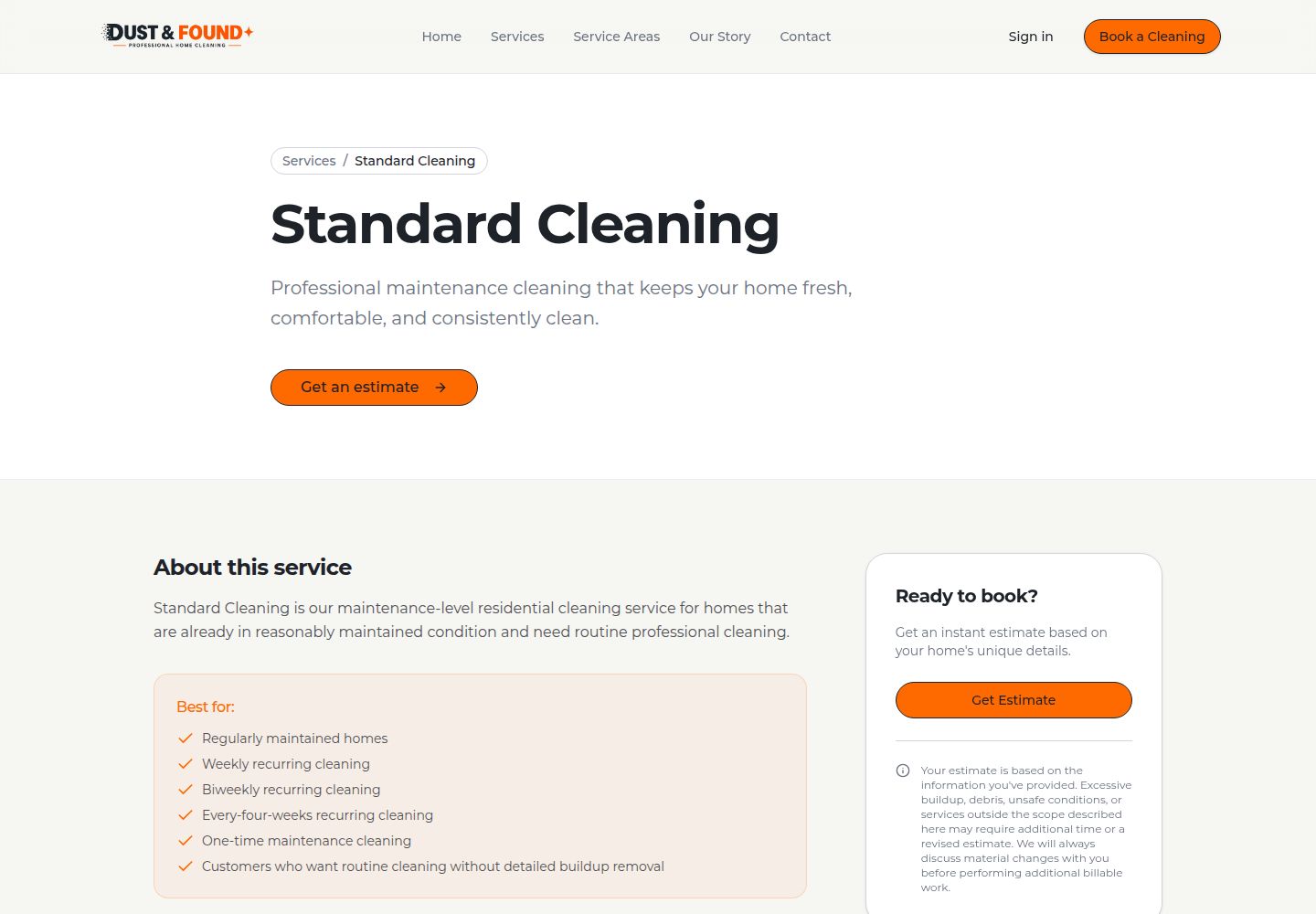
- dust-and-found-service-detail.jpg
Connected-Record Data Chain
These represent implemented data relationships within the TidyOps platform. The approved interface evidence below demonstrates structural setup only and does not prove platform adoption, usage volumes, or business outcomes.
Service Discovery
The initial implementation focuses on the discovery phase. Dust & Found utilizes the TidyOps public-facing estimator to allow potential clients to review service options and initiate the booking workflow.
Standardization of Scope
The platform categorizes services to differentiate between routine maintenance (Standard Cleaning) and restorative care (Deep Cleaning, Initial Clean). This structural standardization provides the baseline configuration for subsequent scheduling and team allocation workflows.
Service Detail Scope
Once a service category is selected, the workflow presents the defined scope of that service. The service detail page outlines what is included, who it is best suited for, and prepares the user to provide property parameters.
Metric Definitions
All public values are withheld because metric publication consent is not recorded.
- COMPLETED COHORT
- Completed bookings whose scheduled dates fall within the inclusive selected window.
- ESTIMATE-LINKED JOB
- A completed cohort booking linked to an estimate.
- CAPTURED PROPERTY DETAILS
- A completed cohort booking linked to an estimate with numeric square footage and a recorded property condition.
- STAFF PARTICIPANT
- A distinct staff member assigned to at least one completed cohort booking.
- COMPLETE CONNECTED WORKFLOW
- A completed cohort booking with a completed job workflow, estimate link, captured property details, and at least one assigned staff participant.
System Architecture
This implementation utilizes the core TidyOps components designed for residential operators.
- Client Estimates
- Job Lifecycle
- Staff Coordination
What does this implementation record prove?
It documents the public website, service navigation, and estimate workflow shown in the approved screenshots. It does not establish financial improvements, conversion gains, time savings, or customer satisfaction outcomes.
For example, an operator can inspect how a service page leads into an estimate and whether the requested service and home details remain understandable. A screenshot demonstrates a visible interface at a point in time, not whether every visitor completed a booking.
How can another cleaning company evaluate this setup?
Use a sample home and a supported service to review the complete path from service information to estimate inputs, price summary, availability, and confirmation. Check the exclusions and disclosures before deciding whether the same structure fits your service model.
Test a changed address, an unavailable appointment, and an ineligible add-on rather than only the happy path. The company’s published offerings and operating rules remain specific to its business; copying this implementation does not transfer its prices, service area, or permissions.
Supplemental evaluation guidance updated 5 October 2026. Original implementation evidence remains dated as shown above.
Investigate the system
TidyOps provides strict operational control for residential cleaning companies. Review the platform capabilities or begin an implementation in your own workspace.